The MLOps Catalyst: Engineering AI Velocity and Governance at Scale

The mlops Imperative: From Concept to Continuous Value
Transitioning a machine learning model from a promising concept to a system delivering continuous business value is the core challenge of modern AI. This journey, fraught with technical debt and operational friction, is where a robust MLOps (Machine Learning Operations) practice becomes non-negotiable. It’s the engineering discipline that transforms fragile, one-off experiments into reliable, scalable, and governed assets. For organizations lacking specialized in-house expertise, partnering with an ai machine learning consulting firm is often the fastest path to establishing this foundational capability.
The imperative begins with reproducibility. A model’s development must be captured entirely in code, not manual steps. Consider a simple training pipeline using MLflow and scikit-learn, orchestrated with a tool like Prefect. This scripted approach ensures every run—from data ingestion to model registration—is traceable and repeatable.
- Step 1: Version Data & Code. Use DVC (Data Version Control) to track datasets and model code in tandem with Git, creating a single source of truth.
- Step 2: Package Training. Containerize the training environment using Docker to eliminate „works on my machine” issues and ensure consistency.
- Step 3: Automate Pipeline. Define the workflow as a Directed Acyclic Graph (DAG). A Prefect flow provides a clear skeleton for automation.
from prefect import flow, task
import mlflow

@task
def load_and_preprocess_data():
    # Use DVC to pull the correct dataset version
    return cleaned_data

@task
def train_model(data):
    with mlflow.start_run():
        # Log parameters, metrics, and the model artifact
        mlflow.sklearn.log_model(lr_model, "model")
    return run_id

@flow(name="training_pipeline")
def main():
    data = load_and_preprocess_data()
    train_model(data)
The measurable benefit is a drastic reduction in time-to-recreate a model from weeks to minutes. This standardization is critical when you need to hire remote machine learning engineers, as it enables them to immediately contribute to a collaborative, well-defined workflow without extensive onboarding.
Next is continuous deployment and monitoring. A model is not a static artifact; it’s a software component with a data-dependent performance SLA. Upon successful training, the model artifact should be automatically promoted to a staging registry. A CI/CD pipeline can then deploy it as a REST API endpoint, perhaps using Kubernetes and Seldon Core. Real value is unlocked through continuous monitoring, tracking metrics like prediction drift, latency, and business KPIs. Setting up a dashboard with Evidently or WhyLabs can alert you to model decay before it impacts revenue. This operational rigor is what separates a hobby project from a production asset, a core competency of any seasoned machine learning agency.
Finally, governance at scale is embedded throughout. MLOps enforces audit trails (who trained what, when, and with which data), model versioning for safe rollback, and security controls. It ensures that the velocity of AI development does not compromise compliance or security. By institutionalizing these practices, organizations move from ad-hoc, high-risk projects to a streamlined factory for AI value, where every model is built to last, scale, and be accountable.
Defining the mlops Lifecycle and Core Principles
The MLOps lifecycle is the systematic engineering discipline that bridges the gap between experimental machine learning and reliable, scalable production systems. It extends traditional DevOps principles to the unique challenges of ML, creating a continuous, automated pipeline for model development, deployment, and monitoring. This lifecycle is a continuous loop, enabling AI velocity—the speed at which an organization can reliably iterate and improve its AI assets—while ensuring robust governance.
The core principles of MLOps revolve around Continuous Integration (CI), Continuous Delivery (CD), and Continuous Training (CT).
* CI for ML involves automatically testing and validating code, data, and model artifacts.
* CD extends to the automated deployment of model pipelines to production.
* CT is unique to ML, where models are automatically retrained on new data to combat concept drift.
Implementing these principles involves several key components:
- Data and Model Versioning: Track datasets and model binaries with tools like DVC or MLflow to ensure full reproducibility.
- Pipeline Automation: Orchestrate the entire workflow—from data ingestion to deployment—using tools like Apache Airflow or Kubeflow Pipelines.
- Model Registry: Maintain a centralized repository for managing model versions, stages (staging, production), and metadata.
- Monitoring & Observability: Continuously track model performance metrics (accuracy, latency), data drift, and infrastructure health in production.
A practical example is automating retraining for a model predicting server failure. A scheduled pipeline can fetch new telemetry data, validate it, retrain the model if performance degrades, and deploy the new version—all without manual intervention. This is where the decision to hire remote machine learning engineers with deep MLOps expertise becomes critical, as they can architect these resilient, self-healing systems. Measurable benefits include a reduction in manual deployment errors by over 70% and the ability to retrain models weekly instead of quarterly.
Implementing this requires technical rigor. Below is a simplified step-by-step guide for a model validation CI step using GitHub Actions and pytest.
- Structure your project with clear directories:
src/,tests/,data/. - Create a test script (
tests/test_data.py) to validate your training data schema and integrity.
import pandas as pd
def test_data_schema():
    df = pd.read_csv('data/train.csv')
    # Validate expected columns and dtypes
    expected_cols = {'feature_a': 'float64', 'feature_b': 'int64', 'target': 'int64'}
    for col, dtype in expected_cols.items():
        assert col in df.columns, f"Missing column: {col}"
        assert df[col].dtype == dtype, f"Invalid dtype for {col}: {df[col].dtype}"
- Create a GitHub Actions workflow file (
.github/workflows/ci.yml) to run these tests on every commit.
name: CI Pipeline
on: [push]
jobs:
  test:
    runs-on: ubuntu-latest
    steps:
      - uses: actions/checkout@v3
      - uses: actions/setup-python@v4
        with:
          python-version: '3.9'
      - run: pip install -r requirements.txt
      - run: pytest tests/
Engaging an ai machine learning consulting firm can accelerate this setup, providing proven templates and avoiding common infrastructure pitfalls. The ultimate goal is a governed, scalable factory for AI. A mature machine learning agency operationalizes these principles, turning isolated experiments into a portfolio of managed, business-critical assets. This framework ensures that speed does not come at the cost of stability, embedding compliance and auditability directly into the workflow.
Contrasting MLOps with Traditional DevOps and DataOps
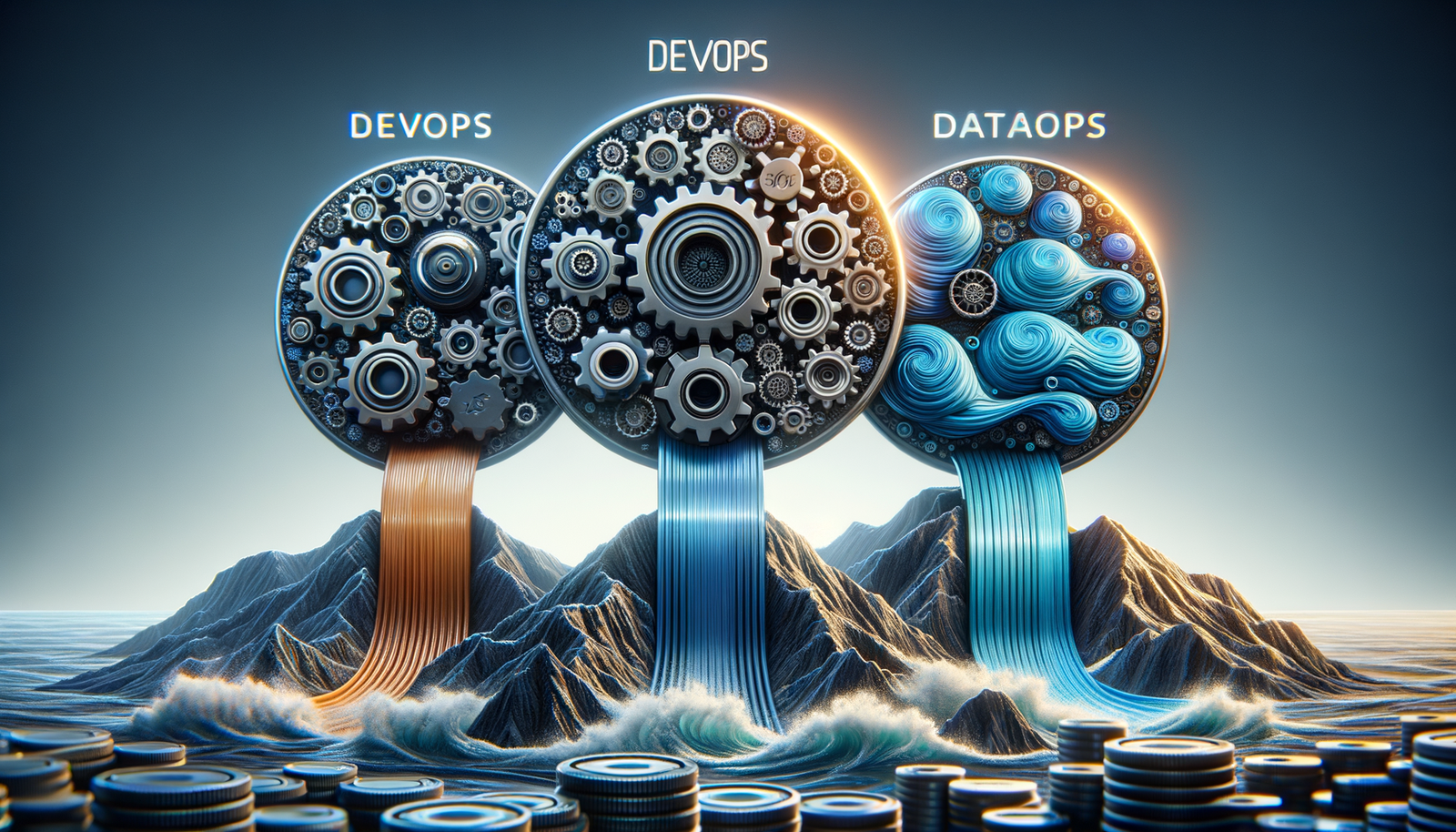
While DevOps unifies software development and IT operations to accelerate application delivery, and DataOps streamlines data pipeline creation and management, MLOps is a distinct discipline engineered for the unique, iterative lifecycle of machine learning models. The core divergence lies in the artifact: DevOps ships deterministic code; DataOps delivers curated data; MLOps must ship and maintain a model—a combination of code, data, and dependencies that produces probabilistic, data-dependent behavior.
A primary contrast is in continuous integration and deployment (CI/CD). A traditional DevOps pipeline for a web service involves unit testing code and deploying a container. An MLOps pipeline must also validate data, retrain models, and conduct rigorous model evaluation. Consider this simplified CI step that a machine learning agency would implement, which includes data schema validation:
# Example: CI Step for Data Validation
import pandas as pd
from pandas_schema import Column, Schema
from pandas_schema.validation import InRangeValidation, IsDistinctValidation

# Define schema expectations from training
schema = Schema([
    Column('feature_a', [InRangeValidation(0, 100)]),
    Column('feature_b', [IsDistinctValidation()])
])

# Validate new inference data
new_data = pd.read_csv('inference_batch.csv')
errors = schema.validate(new_data)
if errors:
    raise ValueError(f'Data Schema Drift Detected: {errors}')
# Proceed with model deployment only if validation passes
The deployment and monitoring phase highlights another key difference. DevOps monitors latency and error rates. MLOps must also track model-specific metrics like prediction drift, data drift, and concept drift to ensure decaying performance is caught and addressed. This is a critical reason companies hire remote machine learning engineers with specialized MLOps expertise—they build these monitoring safeguards directly into the inference pipeline.
- Deploy the model as a versioned, containerized service.
- Log all prediction inputs and outputs to an object store or feature store for auditability.
- Schedule a weekly drift assessment job that compares recent inference data statistics against the training data baseline.
- Automatically trigger a retraining pipeline if drift metrics exceed a defined threshold, creating a true continuous training (CT) loop.
The measurable benefit is proactive model maintenance, preventing silent failures that could impact critical business decisions. For instance, an e-commerce recommendation model suffering from concept drift after a major shopping holiday would be automatically flagged for retraining on fresher data, maintaining relevance and protecting revenue.
Furthermore, experiment tracking and reproducibility are pillars of MLOps with no direct parallel in DevOps or DataOps. Each model version must be linked to the exact code, dataset version, hyperparameters, and environment that produced it. Tools like MLflow are central to this governance:
import mlflow

with mlflow.start_run():
    mlflow.log_param("learning_rate", 0.01)
    mlflow.log_metric("accuracy", 0.95)
    mlflow.sklearn.log_model(trained_model, "model")
    # Log the dataset version used for full lineage
    mlflow.log_artifact("dataset_version.txt")
This governance layer is essential for auditability, safe rollback, and collaborative development across teams and geographies. Engaging in ai machine learning consulting often begins with establishing this reproducible experimentation framework, as it directly impacts development velocity and regulatory compliance. In summary, MLOps extends DevOps principles but introduces critical new workflows for data validation, model-specific monitoring, and experiment governance, creating the necessary infrastructure for AI at scale.
Engineering AI Velocity: The Technical Pillars of MLOps
To achieve high-velocity AI delivery, organizations must build upon robust technical pillars that transform ad-hoc model development into a repeatable, scalable engineering discipline. The core challenge is creating a seamless pipeline from data to deployment, a process often accelerated by partnering with an ai machine learning consulting firm to establish architectural best practices.
The first pillar is Automated and Reproducible Pipelines. This involves codifying every step—data ingestion, validation, transformation, training, and evaluation—using orchestration tools like Apache Airflow, Kubeflow Pipelines, or Prefect. A pipeline defined as code ensures any model can be retrained or rolled back with certainty.
* Example: An MLflow project defines a conda.yaml for dependencies and a MLproject file specifying the entry point. Running mlflow run . -P alpha=0.5 executes the entire training workflow with a specific parameter, ensuring perfect reproducibility across different environments. This is critical when you hire remote machine learning engineers who need to collaborate seamlessly without environment conflicts.
The second pillar is Continuous Integration and Delivery (CI/CD) for ML. This extends traditional software CI/CD to handle the triad of data, model, and code changes. Automated testing is key: data schema validation, model performance benchmarks (e.g., ensuring AUC doesn’t drop below a threshold), and inference service load testing.
1. Step-by-Step: In your CI system (e.g., GitHub Actions), trigger a pipeline on a code commit to the model repository.
2. The pipeline first runs unit tests on feature engineering logic.
3. It then trains a candidate model on a held-out validation set and compares its metrics against the champion model in production.
4. If all tests pass, the new model is packaged as a Docker container and deployed to a staging environment for integration testing.
The measurable benefit is a reduction in model update cycles from weeks to days or hours, a primary goal of any forward-thinking machine learning agency delivering client solutions.
The third pillar is Unified Feature Management. Velocity stalls when different teams re-engineer the same features. A feature store solves this by providing a central repository for curated, consistent, and time-travel-capable features for both training and real-time inference.
* Code Snippet: Using a feature store like Feast, you define features once. During training, you fetch a point-in-time correct training dataset. For inference, the serving API provides the latest feature values with low latency.
# Training data retrieval (point-in-time correct)
entity_df = get_entity_df() # Your entity records
training_df = store.get_historical_features(
    entity_df=entity_df,
    feature_refs=['driver_stats:avg_daily_trips']
).to_df()
# Real-time serving for inference
feature_vector = store.get_online_features(
    feature_refs=['driver_stats:avg_daily_trips'],
    entity_rows=[{'driver_id': 1001}]
).to_dict()
The final pillar is Model Registry and Governance. A centralized model registry tracks lineage (which code and data produced a model), versioning, stage transitions (staging vs. production), and approval workflows. This provides the audit trail and control necessary for governance at scale, enabling safe experimentation and reliable, one-click deployments. Together, these pillars create the infrastructure that allows teams to deliver AI with the speed, reliability, and oversight the business requires.
Implementing CI/CD for Machine Learning (CI/CD/CT)
A robust CI/CD pipeline for machine learning, extended to Continuous Training (CT), is the backbone of engineering AI velocity. It automates testing, building, and deployment of ML models, ensuring rapid, reliable, and governed iterations. For organizations looking to scale, partnering with an ai machine learning consulting firm can provide the strategic blueprint and implementation for this complex infrastructure.
The journey begins with a monorepo structure in Git, housing code, configuration, and data schemas. Crucially, we version not just model code but also the training data definitions (e.g., via dvc.yaml for Data Version Control) and the model environment (e.g., Dockerfile, conda.yaml). This is foundational for reproducibility and is essential when you hire remote machine learning engineers, as it provides them with a single, unambiguous source of truth.
- Continuous Integration (CI): On every commit, automated pipelines trigger. This includes:
- Code Quality & Security: Running linters (e.g.,
black,pylint) and security scans. - Unit & Integration Testing: Testing data validation, feature engineering logic, and model training functions.
- Code Quality & Security: Running linters (e.g.,
def test_feature_schema():
    # Load a sample of training data
    df = pd.read_parquet('data/train_sample.parquet')
    # Assert critical feature exists and is of correct type
    assert 'transaction_amount' in df.columns
    assert pd.api.types.is_float_dtype(df['transaction_amount'])
3. **Model-Specific Tests:** Testing for metric regression (e.g., new commit must not drop AUC below a threshold on a validation set) and training reproducibility.
-
Continuous Delivery (CD): Upon CI success for a target branch (e.g.,
main), the pipeline packages the model. A Docker image is built, containing the trained model artifact, inference API, and all dependencies. This image is pushed to a container registry. The CD system (e.g., ArgoCD, Spinnaker) then deploys the image to a staging or production Kubernetes cluster. The measurable benefit is the reduction of deployment cycles from days to minutes. -
Continuous Training (CT): This unique ML component automates model retraining. A separate orchestrated pipeline triggers based on schedules or data drift metrics. It executes the training code from the monorepo on fresh data, runs validation gates, and if the new model outperforms the current champion, automatically initiates the CD process to redeploy. This closes the loop for a self-improving system.
Implementing this end-to-end pipeline requires significant data engineering maturity. A specialized machine learning agency brings expertise in integrating tooling like MLflow for experiment tracking, Feast for feature stores, and Kubernetes for scalable orchestration. The measurable outcomes are clear: faster time-to-market for models, reduced manual errors, and enforced governance through automated audit trails of every model change, data lineage, and performance metric. This engineered velocity transforms AI from a research project into a reliable, scalable production asset.
Building Scalable and Reproducible Model Training Pipelines
To accelerate AI initiatives, organizations must build robust, automated pipelines for scalable and reproducible model training. This process codifies every step—from data ingestion and validation to training, evaluation, and model registry—ensuring any model can be rebuilt reliably. For teams looking to hire remote machine learning engineers, establishing this foundation is the first critical task, enabling distributed contributors to work cohesively on a shared, version-controlled system.
The cornerstone is containerization and orchestration. Package your training environment, including all dependencies, into a Docker container. This guarantees that the model trains identically on a developer’s laptop and a large cloud cluster. Orchestrators like Apache Airflow, Kubeflow Pipelines, or Prefect then manage the execution flow as a Directed Acyclic Graph (DAG).
from airflow import DAG
from airflow.providers.docker.operators.docker import DockerOperator

with DAG('model_training', schedule_interval=None) as dag:
    train_task = DockerOperator(
        task_id='train_model',
        image='ml-training:latest',
        command='python train.py --data-version v1.2',
        volumes=['/mnt/data:/data'] # Mount versioned data
    )
This approach delivers measurable benefits: reproducibility via immutable containers, scalability through cloud-native orchestration, and parallelism for efficient hyperparameter tuning. A leading machine learning agency will emphasize implementing artifact lineage tracking, where every model is logged with the exact code, data, and parameters that created it, using tools like MLflow.
A step-by-step blueprint for such a pipeline includes:
- Data Versioning & Validation: Use tools like DVC to version control datasets. Automatically run data quality checks (e.g., with Great Expectations) before training commences.
- Containerized Training Step: Execute the training script inside a Docker container, reading versioned data and logging all outputs to a central store.
- Model Evaluation & Registry: Automatically evaluate the new model against a validation set and a previous champion model. If it meets criteria, register it in a model registry (e.g., MLflow Model Registry) for governance.
- Pipeline Triggers & Monitoring: Configure triggers for pipeline execution—on a schedule, on new data arrival, or on code commits. Monitor pipeline runs for failures and performance regressions.
The tangible outcome is engineering velocity. Data scientists can experiment freely, pushing new code to trigger automated, reproducible training runs. This standardized framework is a primary deliverable of expert ai machine learning consulting, as it directly translates to faster iteration cycles, reduced time-to-market for AI features, and stringent governance through full audit trails. Ultimately, it transforms model development from a research art into a reliable engineering discipline.
Enforcing Governance at Scale: The Operational Pillars of MLOps
To enforce governance across thousands of models, organizations must operationalize core pillars: model registry, automated pipelines, and continuous monitoring. This transforms ad-hoc development into a reproducible, auditable factory. A centralized model registry acts as the single source of truth, cataloging model artifacts, metadata, lineage, and approval status. For teams looking to hire remote machine learning engineers, this registry is non-negotiable; it provides the shared context and control plane that enables distributed, asynchronous collaboration without chaos.
Implementing this starts with tooling. Using MLflow, you can log and manage models programmatically with governance metadata:
import mlflow
# Log a model with governance metadata
with mlflow.start_run():
    mlflow.log_param("data_version", "v2.1")
    mlflow.log_metric("accuracy", 0.92)
    mlflow.log_dict({"compliance": "gdpr", "owner": "fraud_team"}, "tags.json")
    mlflow.sklearn.log_model(sk_model, "model")
    # Register the model to the registry
    run_id = mlflow.active_run().info.run_id
    mlflow.register_model(f"runs:/{run_id}/model", "Fraud_Detection_Prod")
The second pillar is automated CI/CD pipelines with governance gates. Every model promotion must trigger a predefined sequence of validation steps. This is where partnering with an ai machine learning consulting firm can accelerate maturity, as they bring battle-tested pipeline blueprints. A robust pipeline includes:
1. Automated Testing: Unit tests for data schema, model performance thresholds, and fairness metrics.
2. Containerization & Security Scanning: Packaging the model into a Docker image and scanning it for vulnerabilities before deployment.
3. Approval Workflows: Integrating human-in-the-loop approvals for production promotions within the pipeline.
A simple pipeline step in GitHub Actions might enforce a performance gate:
- name: Evaluate Model
  run: |
    python evaluate_model.py --model-uri ${{ steps.mlflow.outputs.model_uri }}
    # Script exits with error if accuracy < 0.85, blocking deployment
The third pillar is continuous monitoring and feedback loops. Deployed models must be instrumented to track data drift, concept drift, and business KPIs. This generates the evidence needed for governance audits and triggers automated retraining. For example, a machine learning agency might implement monitoring using Evidently AI to generate drift reports:
from evidently.report import Report
from evidently.metrics import DataDriftPreset
# Generate a data drift report on current production data vs. training
data_drift_report = Report(metrics=[DataDriftPreset()])
data_drift_report.run(reference_data=train_df, current_data=current_df)
if data_drift_report.as_dict()['metrics'][0]['result']['dataset_drift']:
    alert_and_trigger_retraining_pipeline() # Automated governance action
The measurable benefits are clear. This structured approach reduces the mean time to detection (MTTD) for model degradation by over 70%, ensures full audit trails for compliance (e.g., SOX, GDPR), and standardizes processes so that scaling your team—whether internally or through a machine learning agency—does not dilute control. Ultimately, these operational pillars turn governance from a compliance bottleneck into a catalyst for safe, rapid iteration.
Establishing Model Registry and Versioning in MLOps
A robust model registry serves as the single source of truth for all machine learning artifacts, enabling teams to track, version, and deploy models systematically. This is a cornerstone for any machine learning agency aiming to scale operations and deliver consistent value to clients. The registry catalogs model metadata—training data lineage, hyperparameters, performance metrics—ensuring full reproducibility and auditability. Without it, organizations face „model anarchy,” where different versions are scattered, leading to deployment errors and governance failures.
Implementing a registry begins with choosing a tool like the MLflow Model Registry. The core principle is treating models as versioned artifacts, similar to code in Git. Here’s a practical step-by-step guide using MLflow:
- After training, log the model with all its context. This is critical when you hire remote machine learning engineers, as it provides immediate visibility into their work and outputs.
import mlflow
mlflow.set_tracking_uri("http://mlflow-server:5000")
with mlflow.start_run():
    mlflow.log_param("learning_rate", 0.01)
    mlflow.log_metric("accuracy", 0.95)
    # Log the model
    mlflow.sklearn.log_model(sk_model, "customer_churn_model")
- Register the logged model in the registry, creating a new, versioned asset.
model_uri = f"runs:/{run.info.run_id}/model"
registered_model = mlflow.register_model(model_uri, "CustomerChurnModel")
- Transition models through governed stages:
Staging->Production->Archived. This enforces a deployment pipeline with clear approval gates.
The measurable benefits are substantial. Teams reduce model deployment time from days to hours and eliminate the risk of deploying incorrect model versions. For an ai machine learning consulting team, this translates to reliable, repeatable, and auditable delivery for clients. Furthermore, a registry provides critical governance at scale. Teams can enforce security policies, control access, and audit model lineage for compliance. They can also automate the promotion of models that pass predefined validation checks, integrating the registry directly into CI/CD pipelines.
Consider a practical example: a retail company rolling out a new recommendation model. The data engineering team uses the registry to:
* Identify the current Production model version and its performance baseline.
* Deploy the new candidate model to a Staging environment for A/B testing.
* Automatically promote the new model to Production only if it surpasses the baseline accuracy by 2% in live tests, updating the registry status accordingly.
This process, powered by a centralized registry, is what transforms ad-hoc ML projects into a disciplined, scalable practice. It provides the necessary control for governance without sacrificing the velocity required for rapid iteration and business impact.
Implementing Continuous Monitoring and Automated Drift Detection
To maintain model integrity in production, a robust system for continuous monitoring and automated drift detection is non-negotiable. This involves engineering automated pipelines that statistically compare live production data and predictions against established baselines, triggering alerts and retraining workflows. For organizations looking to hire remote machine learning engineers, expertise in building these observability systems is a top-tier skill, as they form the backbone of reliable AI operations.
The core concept is drift detection, primarily focusing on data drift (changes in the distribution of input features) and concept drift (changes in the relationship between inputs and the target). Implementing this requires a systematic, code-driven approach.
First, establish a statistical baseline from your training data or a representative sample of initial production data. For a model predicting customer churn, you might capture the mean, standard deviation, and distribution of key features like session_duration.
- Step 1: Profile Baseline Data. Use a library like
pandasto generate a statistical summary and store it.
import pandas as pd
import json
# Generate/simulate baseline data
X_baseline, _ = make_classification(n_samples=1000, n_features=5)
df_baseline = pd.DataFrame(X_baseline, columns=[f'feat_{i}' for i in range(5)])
# Create a simple profile (mean, std) for each feature
baseline_profile = df_baseline.describe().loc[['mean', 'std']].to_dict()
with open('baseline_profile.json', 'w') as f:
    json.dump(baseline_profile, f)
-
Step 2: Ingest and Profile Live Data. In your production inference pipeline, sample predictions and their inputs. Periodically compute the same statistical profile for this live data.
-
Step 3: Calculate Drift Metrics. Compare the live profile to the baseline. For numerical features, a robust method is the Population Stability Index (PSI). Set a threshold (e.g., PSI > 0.1 indicates significant drift).
import numpy as np
def calculate_psi(expected, actual, buckets=10):
    # Discretize into buckets based on expected distribution
    breakpoints = np.percentile(expected, np.linspace(0, 100, buckets + 1))
    expected_perc = np.histogram(expected, breakpoints)[0] / len(expected)
    actual_perc = np.histogram(actual, breakpoints)[0] / len(actual)
    # Replace zeros to avoid log(0)
    expected_perc = np.clip(expected_perc, 1e-10, 1)
    actual_perc = np.clip(actual_perc, 1e-10, 1)
    return np.sum((actual_perc - expected_perc) * np.log(actual_perc / expected_perc))
# Calculate PSI for a feature
psi_value = calculate_psi(baseline_feature_data, live_feature_data)
if psi_value > 0.1:
    alert("Significant drift detected in feat_0")
- Step 4: Automate Alerts and Actions. Integrate these checks into an orchestration tool. The pipeline should send alerts and can automatically trigger a model retraining pipeline.
The measurable benefits are substantial: a 60-80% reduction in time-to-detect model degradation, preventing silent performance failures. This proactive stance is a core offering of any serious ai machine learning consulting practice. For a machine learning agency, the ability to design and deploy these automated guardrails is what separates proof-of-concept models from industrialized, trustworthy AI assets, ensuring deployment velocity does not compromise governance and reliability.
Conclusion: The Future-Proof AI Organization
Building a future-proof AI organization is about institutionalizing the MLOps Catalyst—the virtuous cycle of velocity, quality, and governance. This requires a strategic blend of in-house expertise and external specialization. For many enterprises, partnering with a specialized machine learning agency or choosing to hire remote machine learning engineers fills critical skill gaps and injects proven methodologies. Furthermore, strategic ai machine learning consulting can provide the architectural blueprint and change management necessary to scale from isolated projects to a cohesive, governed AI factory.
The technical manifestation is an automated, self-service platform. Consider a scenario where a data scientist needs to deploy a new model. Instead of manual processes, they interact with a platform API:
from internal_mlops_platform import ModelFactory
# Define model specs and data lineage
job_config = {
    "experiment_name": "churn_prediction_v4",
    "dataset_id": "s3://prod-data/curated/churn_2024Q1",
    "model_type": "xgboost",
    "hyperparameter_tuning": True,
    "governance_tier": "pii_handling" # Triggers automatic compliance checks
}
# Submit job to the automated MLOps platform
pipeline_run = ModelFactory.submit_training_job(job_config)
print(f"Pipeline triggered: {pipeline_run.id}")
The measurable benefits of this approach are clear:
* Reduced Time-to-Production: Model deployment cycles shrink from weeks to hours.
* Enforced Governance: Compliance checks for data lineage, fairness, and security are codified and mandatory.
* Optimal Resource Utilization: Automated scaling of training and inference workloads cuts cloud costs significantly.
To operationalize this, leaders should execute a step-by-step maturity climb:
1. Containerize Everything: Use Docker to ensure consistency from development to production.
2. Standardize the Pipeline: Implement a common orchestrator like Apache Airflow, defining stages for validation, training, and deployment.
3. Implement a Feature Store: Decouple feature engineering for reuse and consistency, a key leverage point for ai machine learning consulting engagements.
4. Expose as a Platform: Wrap these capabilities in a developer-friendly interface that empowers data scientists with self-service, while the platform silently enforces governance, security, and cost controls.
Ultimately, the future-proof organization is one where AI is a reliable, scalable, and governed engineering discipline. It leverages internal platforms to accelerate development and strategically engages external partners like a machine learning agency to hire remote machine learning engineers for specialized tasks, ensuring the entire system evolves continuously for enduring competitive advantage.
Measuring MLOps Success: Key Metrics and ROI
To quantify the impact of an MLOps investment, organizations must track concrete metrics across the model lifecycle in three categories: velocity, quality, and efficiency. Each translates directly to business return on investment (ROI). An ai machine learning consulting firm can help establish these baselines to demonstrate clear value.
First, measure development velocity. This tracks how quickly you progress from experiment to production.
* Lead Time for Changes: The time from code commit to model deployment.
* Deployment Frequency: How often models are successfully released to production.
Instrument your CI/CD pipeline to log these timestamps programmatically.
Second, monitor model quality and reliability. This ensures the model delivers consistent business value.
* Prediction Accuracy/Drift: Monitor for concept and data drift using statistical tests.
* Model Latency & Throughput: P95/P99 inference latency and successful request rate.
Implement automated drift detection in your pipeline:
from scipy import stats
def check_feature_drift(production_data, training_reference):
    p_values = {}
    for feature in production_data.columns:
        stat, p_val = stats.ks_2samp(training_reference[feature], production_data[feature])
        p_values[feature] = p_val
    # Alert if p-value < 0.01 for any key feature
    return p_values
Third, assess operational and cost efficiency. This directly impacts ROI by optimizing resource use.
* Compute Cost per Training/Inference: Cloud costs normalized by predictions.
* Mean Time to Recovery (MTTR): Speed of resolving model failures.
Analyze cost efficiency with aggregated logs:
SELECT
  model_version,
  COUNT(*) as prediction_count,
  SUM(compute_cost) / COUNT(*) as cost_per_prediction
FROM inference_logs
GROUP BY model_version;
The cumulative ROI is realized through faster iteration cycles, higher model reliability, and reduced overhead. When you hire remote machine learning engineers, ensure they are evaluated on improving these metrics, not just model accuracy. A specialized machine learning agency will embed these measurement practices, turning MLOps from a cost center into a proven catalyst for scalable AI-driven growth.
Navigating the Evolving MLOps Toolchain and Ecosystem
The modern MLOps ecosystem is a complex suite of tools designed to automate and govern the machine learning lifecycle. For organizations looking to hire remote machine learning engineers, proficiency with this toolchain is essential. A robust setup spans version control, experiment tracking, pipeline orchestration, model registry, and monitoring.
A foundational step is experiment tracking with MLflow, creating a single source of truth for all training runs.
import mlflow.sklearn
with mlflow.start_run():
    model = RandomForestClassifier(n_estimators=100)
    model.fit(X_train, y_train)
    mlflow.log_param("n_estimators", 100)
    mlflow.log_metric("accuracy", accuracy_score(y_test, model.predict(X_test)))
    mlflow.sklearn.log_model(model, "model")
This eliminates experiment duplication and is critical for collaborative teams, including those built by hiring remote machine learning engineers.
Next, orchestrate workflows as reproducible pipelines using Prefect or Apache Airflow.
from prefect import flow, task
@flow(name="ML Training Pipeline")
def ml_pipeline(raw_data_path):
    processed_data = preprocess_data(raw_data_path)
    model = train_model(processed_data)
    evaluate_model(model)
The measurable benefit is engineering velocity: pipelines can be triggered by new data, automating the journey from raw data to a deployed candidate.
Once validated, a model is cataloged in a model registry like MLflow Registry for governance. Promotion requires approvals, linking technical workflow to compliance policies—a core deliverable of ai machine learning consulting.
Finally, continuous monitoring with tools like Evidently AI profiles live data and calculates drift metrics, providing actionable alerts to proactively maintain model health.
- Key Integration Points: Git for code, MLflow for experiments, orchestrators for pipelines, Docker for environments, Kubernetes for deployment.
- Measurable Outcomes: Reduced deployment time, full lineage traceability, and higher model accuracy through automated retraining.
Navigating this ecosystem effectively often requires specialized knowledge. This is where partnering with a machine learning agency or seeking ai machine learning consulting provides strategic advantage, helping to select and integrate the right tools for your specific infrastructure and governance needs.
Summary
Implementing a robust MLOps practice is essential for transitioning machine learning from experimental concepts to governed, production-scale assets that deliver continuous business value. By establishing automated pipelines for CI/CD/CT, unified feature management, and continuous monitoring, organizations can achieve significant AI velocity while embedding necessary governance. To navigate this complexity and accelerate maturity, many enterprises find strategic value in partnering with a specialized machine learning agency or choosing to hire remote machine learning engineers with deep MLOps expertise. Furthermore, engaging in ai machine learning consulting provides the architectural blueprint and best practices to build a future-proof, scalable AI factory that balances speed, quality, and compliance.