The Data Engineer’s Guide to Mastering Real-Time Data Ingestion and Processing
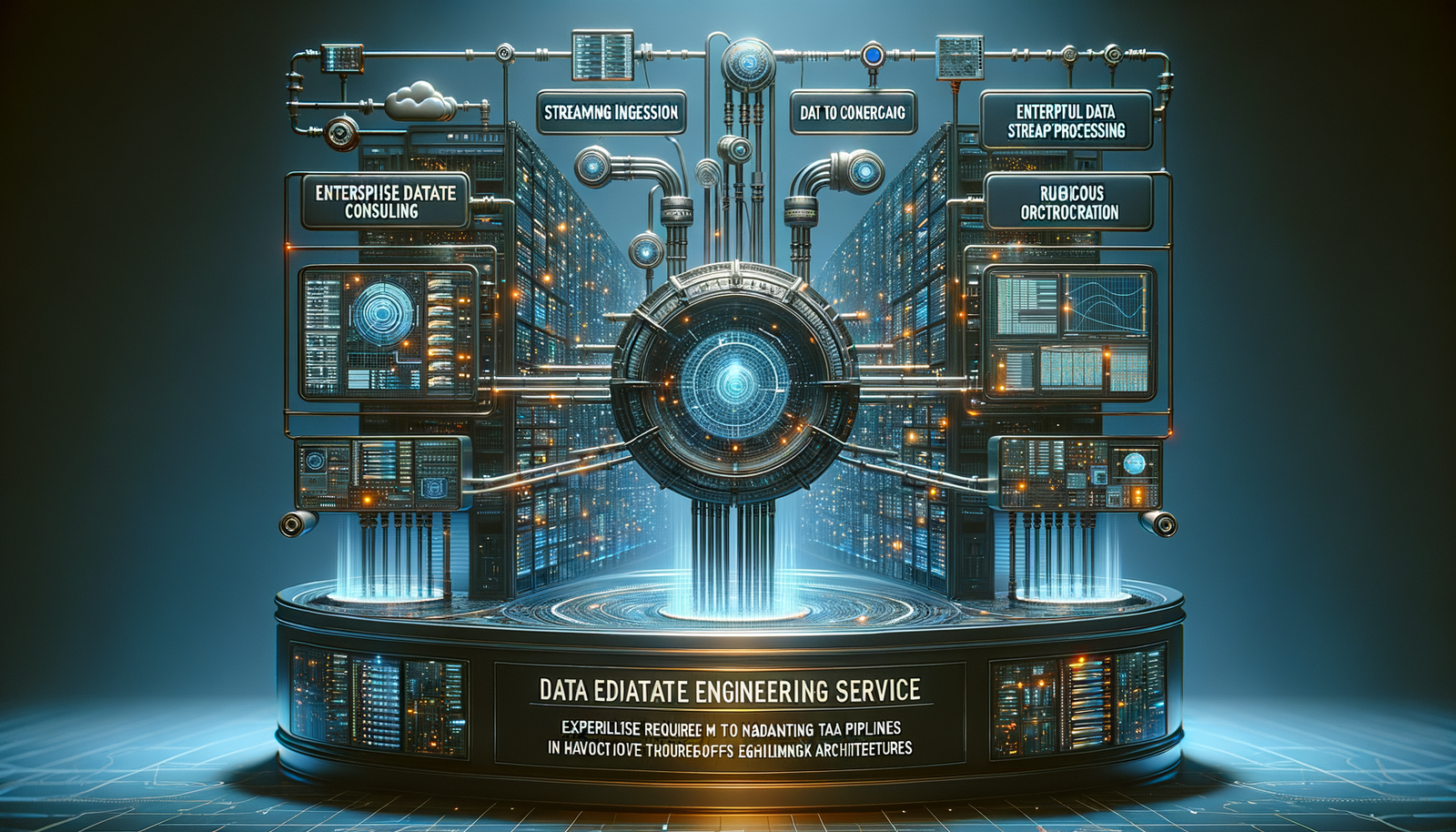
The Pillars of Modern Real-Time data engineering
A robust real-time data pipeline is built on core pillars that work together to move data from source to insight with minimal delay. The first pillar is streaming ingestion. Tools like Apache Kafka or Amazon Kinesis act as the central nervous system, durably collecting high-velocity data from IoT sensors, clickstreams, or application logs. This decouples data production from consumption, a critical design principle advocated by any expert data engineering agency. A common pattern is using a Kafka producer to publish events.
- Example: A Python script publishing a user login event to a Kafka topic.
from kafka import KafkaProducer
import json
producer = KafkaProducer(bootstrap_servers='localhost:9092',
                         value_serializer=lambda v: json.dumps(v).encode('utf-8'))
event = {"user_id": 123, "event": "login", "timestamp": "2023-10-27T10:00:00Z"}
producer.send('user_events', event)
producer.flush()
The second pillar is stateful stream processing. Frameworks like Apache Flink or Apache Spark Structured Streaming transform and enrich raw streams, handling operations like joining a real-time event with a static dimension table or aggregating metrics over sliding windows. This is where business logic is applied.
- Connect to a streaming source (e.g., a Kafka topic).
- Apply transformations using SQL or a DataFrame API (e.g., filter, parse JSON).
- Perform stateful aggregations (e.g., count logins per user session).
- Sink the results to a downstream system.
The measurable benefit is sub-second decision-making, enabling use cases like fraud detection.
The third pillar is the modern data lakehouse, a key offering in enterprise data lake engineering services. This architecture unifies the flexibility of a data lake with the management of a data warehouse. Processed streams are written in real-time to cloud storage (like Amazon S3) in open formats (Parquet, Delta Lake, Iceberg), creating a single source of truth.
- Example Benefit: A real-time dashboard powered by Apache Pinot queries the same Delta Lake tables used by nightly batch jobs, eliminating pipeline duplication.
Finally, the pillar of orchestration and reliability ties everything together. Tools like Apache Airflow for scheduling and Prometheus for monitoring ensure pipeline health, handle retries, and alert on issues. Implementing idempotent writes and exactly-once processing semantics is non-negotiable. Successfully implementing these interconnected pillars often requires specialized data engineering consulting services to navigate complex trade-offs. The result is a measurable competitive advantage: the ability to act on information the moment it is created.
Architecting for Speed: Core Principles of Real-Time data engineering
Building a system that thrives on immediacy requires embracing foundational principles to minimize latency at every stage. A data engineering agency will often start by advocating for a decoupled, scalable, event-driven architecture centered on a stream-processing pipeline.
The first principle is event-driven design at the source. Instead of polling databases, use change data capture (CDC) to publish every insert, update, or delete as an event. This ensures data is captured in real-time.
- Code Snippet: Debezium MySQL Source Connector Configuration
{
  "name": "inventory-connector",
  "config": {
    "connector.class": "io.debezium.connector.mysql.MySqlConnector",
    "database.hostname": "mysql",
    "database.user": "user",
    "database.password": "password",
    "database.server.id": "184054",
    "database.server.name": "dbserver1",
    "table.include.list": "inventory.orders",
    "database.history.kafka.bootstrap.servers": "kafka:9092"
  }
}
This streams every change from the `orders` table to a Kafka topic instantly.
The second principle is processing with stateful, incremental logic. Frameworks like Apache Flink allow you to maintain and update results continuously. This is a key focus of data engineering consulting services, as designing these workflows correctly is critical.
- Step-by-Step Benefit:
- An event
{order_id: 123, category: "electronics", amount: 299.99}arrives. - The streaming job queries its internal keyed state for the current total for
"electronics". - It adds
299.99to the existing total and updates the state. - The new aggregated result is emitted in milliseconds.
The measurable benefit is the elimination of nightly batch windows.
- An event
The third principle is optimizing the sink for fast access. Processed data must be written to systems supporting low-latency queries. This is where enterprise data lake engineering services prove vital, modernizing data lakes with table formats like Apache Iceberg that support fast, ACID-compliant upserts from streams. The entire architecture forms a cohesive pipeline where speed is the primary design constraint.
The Real-Time Data Engineering Toolbox: Frameworks and Platforms

Building a robust pipeline requires a carefully selected stack. The core is the stream processing engine. Apache Flink excels with true streaming and sophisticated state management for low-latency analytics. Apache Spark Structured Streaming offers a powerful micro-batch model, simplifying development for teams in the Spark ecosystem.
- Example Flink Job Skeleton (Java):
StreamExecutionEnvironment env = StreamExecutionEnvironment.getExecutionEnvironment();
DataStream<String> stream = env.addSource(new FlinkKafkaConsumer<>("input-topic", new SimpleStringSchema(), properties));
DataStream<Event> validEvents = stream.map(json -> parseEvent(json)).filter(event -> event.isValid());
validEvents.addSink(new CustomDatabaseSink());
env.execute("Real-Time Filtering Job");
The choice between frameworks is a common topic in **data engineering consulting services**, evaluating team skills and latency needs.
For ingestion, Apache Kafka is the de facto standard. A modern pattern is the Kappa Architecture, where a single stream handles all data, simplifying the system. Processed data must land somewhere actionable, which is where enterprise data lake engineering services become critical. Platforms like Delta Lake and Apache Iceberg transform cloud storage into reliable, performant data lakes.
- Example: Writing a Spark Streaming result to Delta Lake
df = spark.readStream.format("kafka")...
query = (df.writeStream
    .format("delta")
    .outputMode("append")
    .option("checkpointLocation", "/checkpoint/path")
    .start("/delta/events_table"))
Orchestrating components with tools like Apache Airflow manages dependencies and data quality checks. The measurable benefits are substantial: reduced latency, increased data freshness, and simplified architecture. Successfully implementing this end-to-end often requires the deep expertise of a specialized data engineering agency.
Building the Ingestion Pipeline: From Source to Stream
The ingestion pipeline is the conduit that moves data from its origin to a processing stream. It must be fault-tolerant, scalable, and low-latency. A common pattern uses Apache Kafka as the central nervous system. Engaging a specialized data engineering agency can accelerate this foundational build.
Let’s build a pipeline ingesting web clickstream events using Kafka Connect. First, define a source connector configuration (source.json):
{
  "name": "file-source-clickstream",
  "config": {
    "connector.class": "FileStreamSource",
    "tasks.max": "1",
    "file": "/tmp/clickstream.log",
    "topic": "raw.clickstream"
  }
}
Deploy it: curl -X POST -H "Content-Type: application/json" --data @source.json http://connect-host:8083/connectors. This creates a source task that tails the log file, publishing each new line to a Kafka topic. The measurable benefit is decoupling.
Next, transform raw data using a framework like Kafka Streams for simple filtering. This Java snippet filters for only "purchase" events:
KStream<String, String> rawStream = builder.stream("raw.clickstream");
KStream<String, String> purchaseStream = rawStream.filter(
    (key, value) -> value.contains("\"action\":\"purchase\"")
);
purchaseStream.to("cleaned.purchases");
Real-time filtering improves downstream efficiency. The cleansed stream can be consumed by multiple services, including one for loading into a cloud-based enterprise data lake engineering services platform like Delta Lake. This creates a unified, queryable repository.
Data Engineering in Motion: Connecting to Real-Time Sources
Connecting to real-time sources requires establishing persistent, low-latency connections to message queues, CDC logs, and IoT feeds. Partnering with a specialized data engineering agency can accelerate this transition.
A common starting point is connecting to Apache Kafka. Here’s a basic Python consumer example:
from kafka import KafkaConsumer
import json

consumer = KafkaConsumer(
    'user_activity_topic',
    bootstrap_servers=['localhost:9092'],
    auto_offset_reset='earliest',
    enable_auto_commit=False,
    value_deserializer=lambda m: json.loads(m.decode('utf-8'))
)

for message in consumer:
    try:
        event_data = message.value
        # Process the event
        print(f"Processing event: {event_data}")
        consumer.commit() # Manually commit offset
    except Exception as e:
        print(f"Failed to process message: {e}")
        # Implement retry logic
The measurable benefit is latency reduction. For enterprise systems, data engineering consulting services are invaluable for implementing Change Data Capture (CDC) with tools like Debezium, turning static databases into real-time sources—a cornerstone of modern enterprise data lake engineering services.
Ensuring Integrity: Data Validation and Schema Management in Flight
Data validation and schema management are continuous, in-flight processes. This requires a proactive strategy, often developed with expert data engineering consulting services. The goal is to prevent „bad data” from polluting critical resources like an enterprise data lake engineering services platform.
Leverage schema registries. Tools like Confluent Schema Registry enforce a contract. When a producer sends an event violating evolution rules, it can be rejected. Here’s a simplified Avro schema definition:
protocol FlightEventProtocol {
  record FlightEvent {
    string flight_id;
    string tail_number;
    int32 altitude;
    double latitude;
    double longitude;
    long event_timestamp;
  }
}
Beyond structure, implement content validation within your stream processing logic. For example, a Flink job can validate aircraft sensor data:
DataStream<RawEvent> rawStream = ...;
DataStream<ValidatedEvent> cleanStream = rawStream
    .filter(event -> event.getAltitude() >= 0) // Discard invalid altitudes
    .map(event -> new ValidatedEvent(
        event.getFlightId(),
        event.getTailNumber(),
        Math.max(event.getTemperature(), -50.0) // Apply sensible bound
    ))
    .uid("data-validation-mapper");
The measurable benefits are reduced data incidents and increased trust in real-time dashboards. This disciplined engineering is a hallmark of a mature data engineering agency.
Processing for Insight: Transforming Streams into Value
Transforming high-velocity events into actionable insights involves implementing business logic, stateful computations, and real-time analytics. A data engineering agency excels at designing these robust, scalable pipelines.
Transformation involves key steps:
1. Parsing & Validation: Use a stream processor to deserialize and validate.
2. Enrichment: Join events with context (e.g., user profiles).
3. Aggregation: Perform stateful computations like rolling counts.
- Example using PyFlink for validation:
def validate_event(event):
    try:
        parsed = json.loads(event)
        if all(k in parsed for k in ['user_id', 'timestamp', 'action']):
            return parsed
    except:
        pass
    return None
validated_stream = stream.map(validate_event).filter(lambda x: x is not None)
The output must land in a system built for analysis. Enterprise data lake engineering services architect this storage layer using a medallion architecture. Processed streams are written in near-real-time to a „silver” zone as Delta Lake tables. The measurable benefit is a drastic reduction in time-to-insight. Engaging with expert data engineering consulting services helps navigate complexities like state management and exactly-once processing.
Stream Processing Paradigms: A Data Engineering Perspective
Selecting the right stream processing paradigm is foundational. The choice hinges on latency, consistency, and state requirements. Engaging a specialized data engineering agency is crucial for this architectural decision.
Micro-batch processing, exemplified by Spark Streaming, treats streams as small, deterministic batches. It offers strong consistency and simplifies integration, ideal for near-real-time ETL.
- Example: Spark Structured Streaming Aggregation (Python)
from pyspark.sql import SparkSession
spark = SparkSession.builder.appName("SalesAgg").getOrCreate()
df = spark.readStream.format("kafka").option("subscribe", "sales").load()
json_df = df.selectExpr("CAST(value AS STRING) as json")
aggregated_df = json_df.groupBy("product_id").agg({"amount": "sum"})
query = aggregated_df.writeStream.outputMode("complete").format("console").start()
The benefit is *fault-tolerant, exactly-once processing*.
In contrast, true stream processing (e.g., Apache Flink) handles each event individually with millisecond latency, critical for fraud detection. It requires careful state management and handles late data via watermarks.
- Example: Flink Event-time Window with Watermark (Java)
DataStream<Transaction> transactions = env.addSource(kafkaSource);
DataStream<FraudAlert> alerts = transactions
    .assignTimestampsAndWatermarks(WatermarkStrategy.<Transaction>forBoundedOutOfOrderness(Duration.ofSeconds(5)))
    .keyBy(tx -> tx.getAccountId())
    .window(TumblingEventTimeWindows.of(Time.minutes(1)))
    .process(new FraudDetectionProcessFunction());
The key benefit is *sub-second latency*.
The pragmatic Kappa Architecture, using a single stream-processing layer, is gaining favor for simplicity. Data engineering consulting services help evaluate this choice, which dictates the pipeline’s cost, performance, and maintenance profile.
Practical Data Engineering: Building a Real-Time Aggregation Pipeline
Let’s build a pipeline aggregating website clickstream events per user session in 5-minute windows, using Kafka, Flink, and a cloud data lake.
- Step 1: Source Connection. Connect to Kafka with PyFlink.
from pyflink.datastream import StreamExecutionEnvironment
from pyflink.datastream.connectors.kafka import KafkaSource
env = StreamExecutionEnvironment.get_execution_environment()
source = KafkaSource.builder() \
    .set_bootstrap_servers("kafka-broker:9092") \
    .set_topics("raw-clicks") \
    .set_group_id("flink-aggregator") \
    .set_value_only_deserializer(SimpleStringSchema()) \
    .build()
click_stream = env.from_source(source, WatermarkStrategy.no_watermarks(), "Kafka Source")
- Step 2: Data Parsing & Windowing. Parse JSON and apply a tumbling window.
parsed_stream = click_stream.map(lambda x: json.loads(x)) \
    .assign_timestamps_and_watermarks(WatermarkStrategy.for_monotonous_timestamps()) \
    .key_by(lambda event: event["user_id"]) \
    .window(TumblingEventTimeWindows.of(Time.minutes(5)))
- Step 3: Aggregation. Count events and sum a metric like
time_on_pageper window.
class AggregateFunction(ProcessWindowFunction):
    def process(self, key, context, elements, out):
        count = len(elements)
        total_time = sum(e["time_on_page"] for e in elements)
        result = {"user_id": key, "window_end": context.window().end, "total_clicks": count, "total_time": total_time}
        out.collect(result)
result_stream = parsed_stream.process(AggregateFunction())
- Step 4: Sink. Write results to a database or enterprise data lake.
The benefits are significant: latency reduction from hours to seconds and offloading expensive aggregation work. Engaging a data engineering agency ensures production-grade robustness, while data engineering consulting services architect correct windowing and state management.
Operationalizing and Scaling Your Real-Time Systems
Moving to production requires operational excellence and scalability. A specialized data engineering agency provides the architectural rigor needed. The core principle is to treat pipelines as mission-critical software, applying DevOps practices.
Start by containerizing applications with Docker and orchestrating with Kubernetes for consistency and easy scaling.
- Example Kubernetes Deployment Snippet:
apiVersion: apps/v1
kind: Deployment
metadata:
  name: flink-job
spec:
  replicas: 3  # Adjust for scale
  template:
    spec:
      containers:
      - name: flink-jobmanager
        image: my-registry/fraud-job:1.0
        resources:
          requests:
            memory: "2048Mi"
            cpu: "1000m"
Implement auto-scaling based on pipeline lag or CPU to optimize costs—critical for enterprise data lake engineering services managing petabytes.
Proactive monitoring and alerting are non-negotiable. Instrument applications and export metrics to Prometheus. Create Grafana dashboards and configure alerts for:
1. Consumer Lag: Indicating processing is falling behind.
2. Error Rates: Spikes in deserialization failures.
3. System Resources: Memory or disk pressure.
Engaging data engineering consulting services helps establish these observability frameworks. Design for state management and fault tolerance; for Flink, regularly configure and test savepoints for quick recovery.
Finally, integrate with downstream enterprise data lake engineering services to reliably land processed events in a cloud data lake in query-optimized formats like Parquet. This creates a lambda architecture serving both real-time and historical workloads from a single source of truth.
The Data Engineer’s Guide to Monitoring and Reliability
Effective monitoring covers data freshness, pipeline latency, data quality, and system resources. Instrument your jobs; for Spark Structured Streaming, enable metrics.
- Enabling Spark Metrics:
spark = SparkSession.builder \
    .config("spark.sql.streaming.metricsEnabled", "true") \
    .getOrCreate()
For data quality, implement checks within the pipeline using frameworks like Great Expectations or custom logic to monitor for record count fluctuations, null rate spikes, or schema drift. The benefit is a direct reduction in mean time to detection (MTTD) and mean time to recovery (MTTR).
Your monitoring stack should:
1. Collect Metrics from all components (Kafka lag, CPU).
2. Centralize Logs using the ELK Stack.
3. Define SLOs/SLAs (e.g., „99.9% of events processed within 5 seconds”).
4. Visualize and Alert with Grafana and PagerDuty.
This operational rigor is where data engineering consulting services prove invaluable. For large-scale implementations, enterprise data lake engineering services include designing the observability layer as a core component. Partnering with a seasoned data engineering agency provides battle-tested playbooks for incident response.
Future-Proofing Your Architecture: Scalability and Cost Optimization
Design for elastic scalability and intelligent cost controls by separating compute from storage and leveraging serverless technologies. A medallion architecture within your data lake, a core offering of enterprise data lake engineering services, structures processing for efficiency.
Use serverless compute (e.g., AWS Lambda) triggered by new file arrivals for scalable, cost-effective transformations.
- Python Snippet for a Lambda Handler:
import boto3
import pandas as pd
def lambda_handler(event, context):
    # Get new file from S3 event
    bucket = event['Records'][0]['s3']['bucket']['name']
    key = event['Records'][0]['s3']['object']['key']
    obj = s3.get_object(Bucket=bucket, Key=key)
    df = pd.read_csv(obj['Body'])
    # Clean and transform
    df_cleaned = df.drop_duplicates()
    # Write to Silver layer in Parquet
    df_cleaned.to_parquet(output_buffer, index=False)
    s3.put_object(Bucket='data-lake', Key=f'silver/{key}.parquet', Body=output_buffer.getvalue())
Benefits: **serverless compute** charges only for execution time, and **Parquet** reduces storage costs and improves query performance.
Further optimize with:
– Autoscaling with Cool-Down Periods to prevent resource thrashing.
– Intelligent Data Tiering to move cold data to cheaper storage.
– Workload Management & Budgets to control spending.
This ongoing optimization is where data engineering consulting services deliver value, helping right-size resources and establish FinOps practices for a cost-effective, scalable architecture.
Summary
This guide outlines the essential pillars for building real-time data pipelines: robust streaming ingestion, stateful stream processing, modern data lakehouses, and rigorous orchestration. Successfully implementing this architecture often requires the expertise of a specialized data engineering agency to navigate technical trade-offs. Core services like data engineering consulting services are crucial for designing scalable processing logic and operational best practices, while enterprise data lake engineering services provide the foundational storage layer that unifies streaming and batch data for actionable insights.